
Emerging Reflections on Social Care Staff Retention
By Celia Netana, IMPACT Facilitator & The Ategi Comms Team
Over the past few months, the IMPACT project at Ategi has explored what helps people stay in social care roles for the long term. Earlier conversations with staff highlighted three key themes around retention: supportive working environments, appreciation and recognition, and fairness and work/life balance.
Now, the project is entering its next phase — widening the conversation to include the voices of people we support and the next generation of social care workers.
We caught up again with Celia Netana, IMPACT Facilitator at Ategi, to hear more about what’s happened since our last update, what early reflections are emerging, and why listening to different perspectives matters so much when thinking about the future of social care.
Reflecting on the First Phase
Since our last conversation, Celia has been feeding back the early themes gathered from Ategi staff through workshops and one-to-one conversations.
“It’s actually been really reassuring,” Celia explains. “There weren’t any huge surprises in what people were saying. Staff spoke about their experiences around recognition, fairness and supportive environments — and everyone seemed very aware of why those things matter.”
For Celia, this shared understanding is important in itself.
“It shows people know what helps them feel valued and supported at work. There was a real sense of honesty and self-awareness in the conversations.”
The project is now moving beyond staff experiences alone and looking at retention through a wider lens — including the experiences of people receiving support and students just entering the sector.
Hearing from Future Social Care Workers
One of the latest stages of the project involved visiting Coleg y Cymoedd’s Nantgarw campus alongside Ategi’s Lynn Longland to speak
with Health and Social Care students who had recently returned from work placements.
The workshops invited students to reflect openly on their experiences in social care settings — what inspired them, what challenged them, and how they felt about their futures in the sector.
Using interactive activities, students shared honest one-word reflections about placement experiences, ranging from “rewarding” and “fun” to “tiring” and “chaotic”.
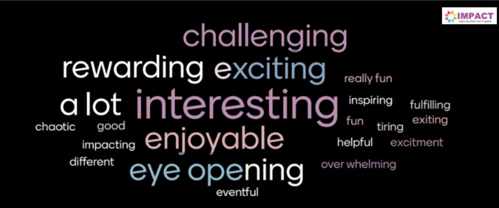
“It was really encouraging how candid they were,” says Celia. “No one pretended social care was easy. They were very realistic about the responsibility involved, but they also clearly found meaning in the work.”
The sessions explored students’ hopes and fears about working in care, as well as what employers can do to help people stay in the sector long term.
Ategi’s Lynn Longland also spoke to students about values-based recruitment and the wide range of careers available within social care.
“For many of the students, meaningful work really mattered,” Celia reflects. “You could see that values and purpose were important to them. They weren’t looking for glamour! They wanted work that felt worthwhile.”
The workshops also highlighted the importance of creating pathways into social care for future generations.
“Ategi has some fantastic retention rates, with staff staying for many years,” Celia says. “But it’s also important to think about the future workforce — who will come into the sector over the next ten years and how organisations can support them to build long-term careers.”
It was positive to hear from the student group that most of them thought of social care as a long term career option rather than a “job for now”.
Including the Voices of People We Support
Alongside speaking with students, Celia has also spoken with with people supported by Ategi — an important next step in understanding the real impact of staff retention and what matters to People We Support.
This has included visits to Ategi’s Craft Club and Ty Cornel and speaking with people in Support Circles and Shared Lives.
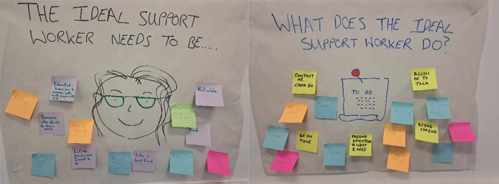
Rather than formal interviews, Celia has worked with support staff to develop creative and flexible approaches to help people share their views in ways that feel comfortable and natural.
“We’re asking questions like: if you were writing a job advert for the perfect support worker, what would you look for?” Celia explains. “What qualities matter? What makes somebody good at supporting you?”
In general, people are looking for a professional best friend in their support worker but the answers, she says, may be deeply personal and different for everyone.
“For one person, it could be reliability or kindness. For someone else, it might be shared interests, humour or supporting the same football team. What matters is understanding what good support feels like from the perspective of the person receiving it.”
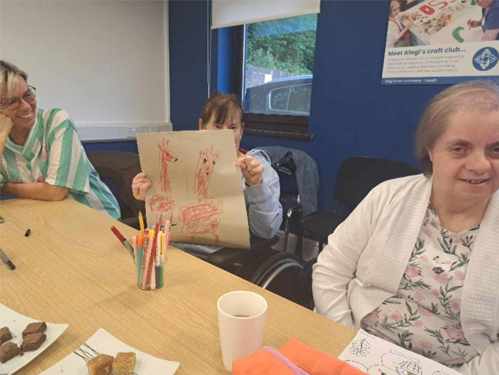
Celia is keen to avoid disrupting existing routines and activities, instead joining people in spaces where they already feel relaxed and comfortable.
“I realised very quickly that Craft Club is important time for people,” she says. “Everyone already had their plans and activities for the day, so I didn’t want to interrupt that. Sometimes the best conversations happen more naturally — over lunch, during activities, just chatting together.”
“Thank you to all the People We Support who took the time to speak with me.,” she says. “Their voices are the most important.”
Looking Ahead
Over the last few weeks left at Ategi, Celia has continued writing up reflections from students, support workers and people supported by Ategi before handing the project over to IMPACT colleague Kayleigh, who will lead the next stage of the work, developing outputs.
The final phase will focus on turning everything learned into practical resources that can be shared across Ategi and in the long term more widely across the social care sector.
Current plans include:
· A Good Retention Summary Guide for social care organisations and practitioners
· Shareable resources and infographics
· A short podcast series exploring different perspectives on staff retention, including staff experiences, student reflections and the voices of people we support
The aim is not only to understand what helps staff stay in social care — but to share those lessons in ways that can support positive change across Wales and beyond.
As Celia reflects:
“Thank you so much to everyone at Ategi Wales, People We Support and to the students at Nant Garw for taking the time to share your experiences and ideas with me on this really important topic. The more voices we hear, the better we understand what truly matters.”


About the author
Ategi comms
This post was written by the Ategi comms team.