
Gina
Community Support
From Isolation to Independence
For nearly nine years, Gina barely left her home.
Struggling with her mental health and the impact of a violent relationship, she found it increasingly difficult to trust others or go out into the community. Even answering the door or phone felt overwhelming. Over time, isolation became her normal.
“I was constantly in my pyjamas. I wouldn’t go out. I couldn’t communicate with anyone. I didn’t trust anyone.”
After a hospital admission highlighted just how much support she needed, Gina’s niece helped her access social services. Eventually, she was referred to Ategi for community support.
That was over three years ago.
Building Trust – Slowly
When Gina first started with Ategi, trust was one of the biggest barriers.
“She’s not very forthcoming with new individuals,” says her support worker, Analees. “In the beginning, it’s about getting used to the people who are going to support you. That takes time.”
New support workers didn’t simply walk into Gina’s home. They shadowed experienced staff first. If someone unfamiliar arrived, they waited outside until a known worker was present.
“It’s not that I think they’ll do anything,” Gina explains. “It’s just that I don’t know them.”
That boundary was respected.
“Person-centred support means working at the individual’s pace,” Analees says. “You build the relationship first. You make sure they feel safe.”
Over time, that trust has grown.
“She’s been much more forthcoming with new staff now,” Analees explains. “That shows growth. She’s giving herself a chance to get to know new people.”
The Importance of Consistency
Today, Gina is supported three times a week — usually Monday, Wednesday and Friday.
And those days matter.
“I look forward to a Monday. I look forward to a Wednesday. I look forward to a Friday.”
For Gina, those visits are more than appointments in a diary. They are structure. Safety. Connection.
“It’s consistency,” says Analees. “Knowing someone is coming. Knowing you’re not on your own.”
On the days her support workers visit, Gina goes out into the community — attending hospital appointments, shopping, going for coffee, or simply getting fresh air in Cardiff Bay.
“Before, she would stay inside,” Analees explains. “Now she’ll say, ‘I want to do this,’ or ‘Let’s go there.’ She’s taking the lead more.”
Regaining Confidence
Gina doesn’t always recognise her own progress.
“I don’t see how well I’ve done. Other people do. I don’t.”
But those around her see the difference clearly.
“There’s been a lot of growth,” says Analees. “She’s building confidence in small ways — even just trying new things or allowing new staff to shadow.”
Support isn’t about doing things for Gina. It’s about doing things with her.
“We encourage her to treat herself,” Analees smiles. “If she sees something she likes, why not? Those small things help someone feel good about themselves.”
Gina recently bought herself new trainers and clothes — something she might not have done in the past.
“Self-care builds confidence,” Analees adds. “And confidence builds independence.”
Rocky: A Companion in Recovery
A major part of Gina’s journey has been her dog, Rocky.
“He’s my soul mate best friend.”
Rocky has helped Gina manage her depression and feel less alone. With support from her team, she takes him to appointments and on walks.
For Gina, Rocky represents comfort and companionship. For her support team, he represents progress.
More Than Care
When Gina first met her support workers, she was told something important:
“We’re not carers. We’re support workers.”
That distinction matters.
Support means:
-
Respecting boundaries
-
Working at Gina’s pace
-
Encouraging independence
-
Building real relationships
“You’re building trust,” Analees explains. “You’re helping someone in the way they want to be helped. That’s what gives this job meaning.”
Today, Gina feels safer, more confident, and more connected than she did three years ago.
“I do feel safe when I’ve got the girls around me,” she says.
And sometimes, feeling safe is where everything begins.
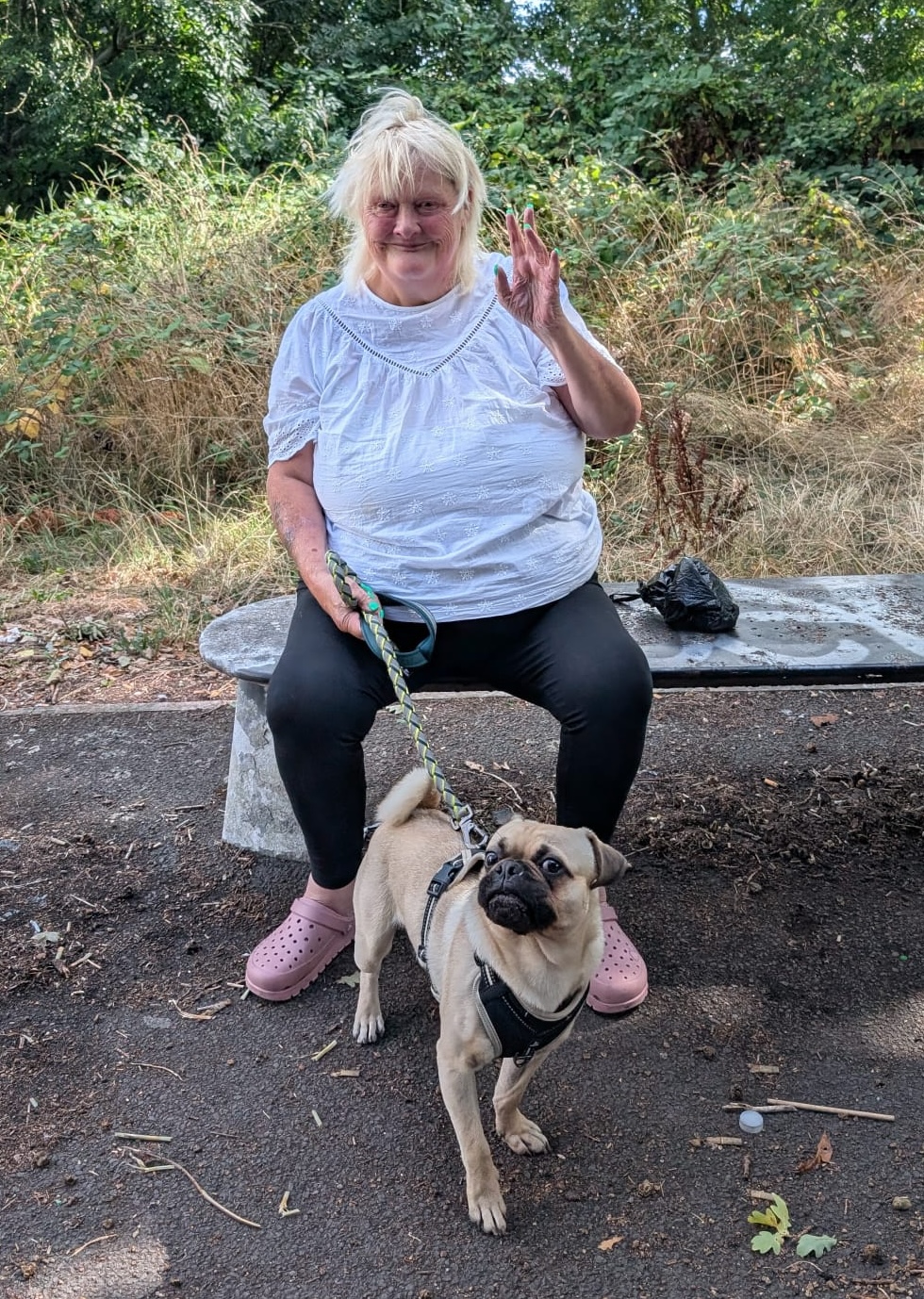
Gina and her dog Rocky.
“I look forward to a Monday. I look forward to a Wednesday. I look forward to a Friday.”
Could Ategi support yourself or a loved one?
If you or a loved one needs support due to disability, mental health needs, autism, homelessness, or a life transition, Ategi can help. We provide person-centred care to build confidence, skills, and independence.
Listen to Gina describing her experience of being supported by Community Support.
Do you want to find out more about our services?
Related information


